Local radar
Charleston, WV (KRLX) Radar
Watch the KRLX weather radar loop for Charleston, West Virginia. Pause or step through images in manual mode.
Try the experimental radar map near KRLX. This map combines radar data from multiple sites.
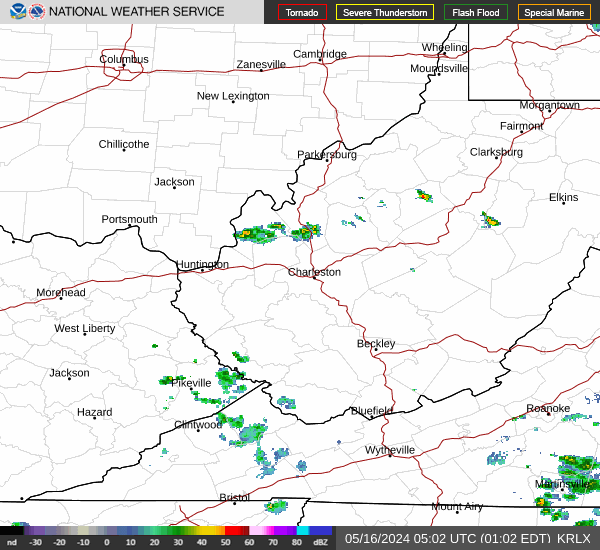
Loading radar imagery…
Left/right arrow keys: older/newer, unless you are using another control. Playback uses all 10 NWS images, 300 ms per frame plus a 1.5 s pause on the newest.
Loading radar imagery…
Check the timestamp printed on the image. Radar images can be 5–10 minutes behind current conditions. Refresh-request age is not observation age. Images are refreshed only when you request it.
Source image: https://radar.weather.gov/ridge/standard/KRLX_loop.gif
The radar image is unavailable. Try refreshing or choose another radar.
Nearby radars to KRLX
Every other catalog site within 200 miles, nearest first. These approximate distances are between radar sites; they are not coverage ranges.
- Jackson, Kentucky (KJKL)100 miles
- Roanoke, Virginia (KFCX)119 miles
- Cincinnati, Ohio (KILN)136 miles
- Pittsburgh, Pennsylvania (KPBZ)173 miles
- Knoxville, Tennessee (KMRX)174 miles
About KRLX
KRLX is the ICAO code for the radar cataloged at Charleston, West Virginia.
- ICAO station code
- KRLX
- Catalog location
- Charleston
- State / territory
- West Virginia
- County / area in catalog
- Kanawha
- Latitude
- 38.3111°
- Longitude
- -81.72277°
- Catalog elevation
- 1213 feet (370 meters)
- NCDC identifier
- 30001915
- WBAN identifier
- 53834
Station listings and coordinates come from the NWS radar catalog (downloaded ). County/area names, identifiers, and elevations come from NOAA’s station metadata (downloaded ). These catalog snapshots do not report current radar availability. Catalog elevation includes the ground, tower, and feed horn.
Reading the radar
Check the timestamp printed on the image. A regional view helps you follow the bigger picture; an individual radar gives you a closer look. Their timing and coverage can differ.
Radar imagery comes from the National Weather Service. Use local forecasts and warnings alongside the radar.